Photo: Tommy Gildseth·CC BY-SA 4.0· Wikimedia Commons
Islands / Oslo / Gressholmen
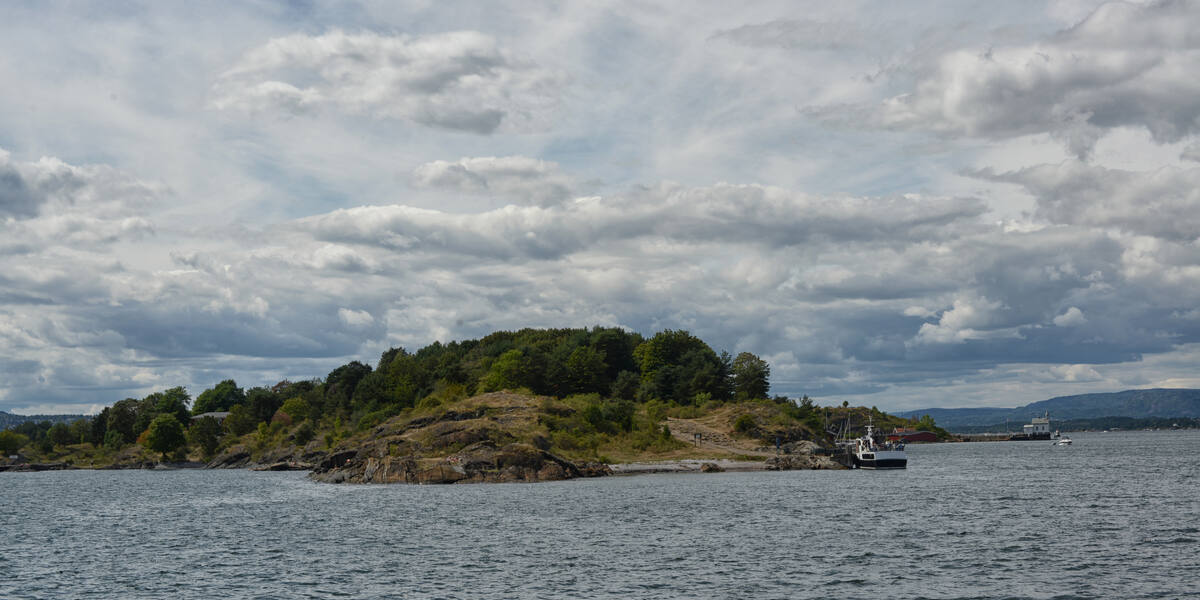
A green island in the inner Oslofjord, joined by land to Rambergøya and Heggholmen. Norway's first airport opened here in 1927 and was the country's main airport until 1939. Gressholmen Kro, the island inn, is open through the summer. Several swimming spots, including a naturist area.
Southeast of Bygdøy, a low green island is joined to Rambergøya and Heggholmen, three islands bound into one by old landfill. The old aircraft hangar and the slipway are still visible on the north side, where Norway's first airport stood. The hangar shows best from the water off Gressholmen Kro.
Gressholmen–Rambergøya nature reserve (wetland, protected since 1992). The boundaries and the rules are in Naturbase, and they are worth checking before you land anywhere outside the marked areas.
Ferry from Rådhusbrygge 4 (the City Hall quays).
Times shift with the season, and several of the island boats run only in summer. Check the current timetable at Ruter.
Gressholmen is small, about 0.05 square kilometres, though the three linked islands cover some 149 dekar between them (a dekar is 1,000 square metres). The name is plain description: grazing land out in the fjord. Livestock were kept here long before there was an airport.
Aviation is what made the island known. Construction began in 1926, and in 1927 Gressholmen seaplane harbour opened as Oslo's first airport. The first aircraft in was a Dornier Do J Wal of Deutsche Luft Hansa, which landed on 16 July 1927. A route to Berlin ran from here the same day, via Gothenburg, Copenhagen and Stettin, with Dornier aircraft. The seaplane harbour had one obvious limit: it could only operate from 1 April to 30 September, because the fjord froze in winter. That is why Sola outside Stavanger, which opened in 1937, became Norway's first year-round civil airport.
Gressholmen was the country's most important airport until Fornebu opened in 1939 and took over. During the Second World War the Germans used the facility as a workshop for seaplanes. An anti-aircraft battery on the island was manned by 15 officers and 80 enlisted men. On the morning of 9 April 1940 only six officers, 22 soldiers and 17 recently called-up recruits were present, without proper cover, sandbags or helmets, while German dive bombers attacked.
Boat owners still use the hangar and the slipway from the airport years, the hangar for winter storage and repairs.
Grazing animals keep parts of the landscape open, and paths cross the scrub and shore meadow. Of the several swimming spots, one is a naturist area. Gressholmen Kro closed for a period after 2015 and opened again in 2017 under new owners.
The Gressholmen–Rambergøya nature reserve was established in 1992 to protect the wetland. Birds and shore meadow are the core of it.
The ferry leaves from Rådhusbrygge 4, moved there from Vippetangen on 21 March 2015. Private boats can moor at the quays or anchor in the coves around the group. Gressholmen is joined to Rambergøya and Heggholmen, and you can walk dry-shod between the three. The 1992 nature reserve protects wetland and birdlife, so keep to the paths in the nesting season. Check Naturbase, the national database of protected areas, for current access rules before going ashore away from the prepared spots.
Norway's first airport lay out here on a grazing island, and it could only be used in summer. When the fjord froze, the flying stopped, which is why Sola and later Fornebu took over.
In 1927 you could fly from this island and be in Berlin nine hours later, via Gothenburg, Copenhagen and Stettin, in a Dornier flying boat.
The island was full of feral rabbits for years. They were removed at Easter 2007 because they dug up the vegetation and caused erosion on such a small island.
The hangar you see from the water is the one that housed the seaplanes in the 1920s and 30s. Pleasure boats are stored there now, where the flying boats stood.
Oslo Sea Experience passes Gressholmen on its private fjord trips from Tjuvholmen.
The Norwegian version notes which facts were taken from each source: Gressholmen på norsk.