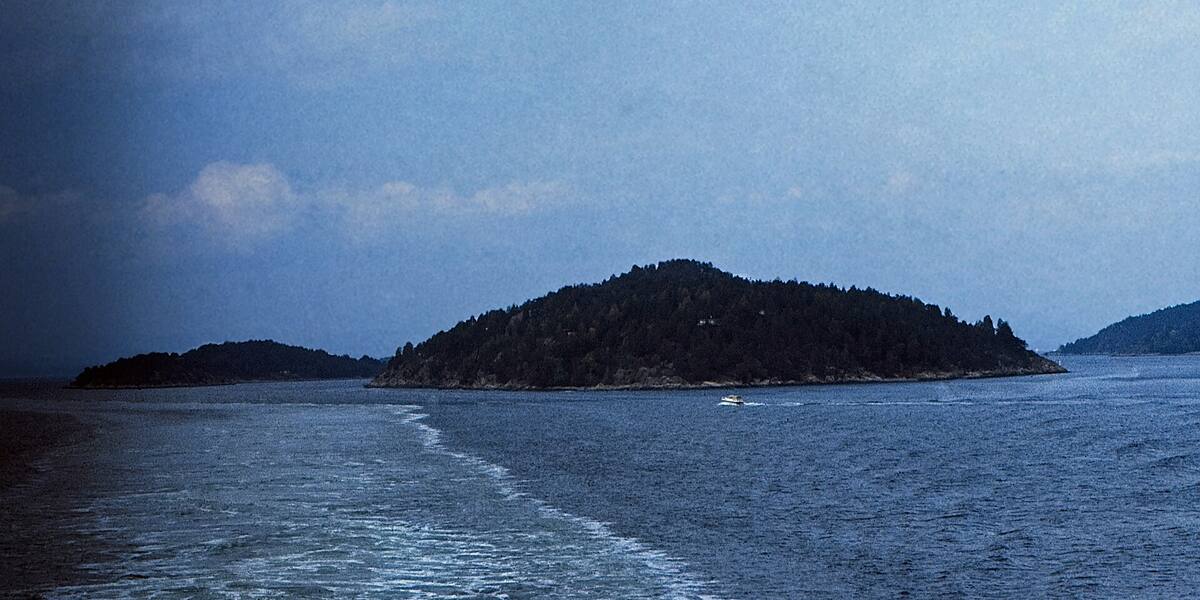
Photo: Rüdiger Stehn from Kiel, Deutschland·CC BY-SA 2.0· Wikimedia Commons
Islands / Frogn / Aspond
Island in the northern part of the Drøbak sound, about 30 hectares (300 dekar) with around 46 cabins. Privately held, with the main shipping lane in to Oslo passing close along the east side. The B21 boat calls at its own quay here; otherwise private boat.
A wooded cabin island in the northern part of the Drøbak sound, just north of Håøya, with Fagerstrand on Nesodden close to the east. It covers around 30 hectares (300 dekar) and rises to 68 metres at its highest. The main shipping lane in to Oslo runs tight along the east side, so passing here puts you in the same channel the large ferries and cargo ships use.
B21 boat service / private boat.
Times shift with the season, and several of the island boats run only in summer. Check the current timetable at Ruter.
Aspond is privately held, with around 46 summer cabins. Its known history belongs to the water around it more than to the island itself. The channel east of Aspond is one of the busiest approaches to Oslo, with something in the order of 5,600 vessels a year heading for the harbour. The Norwegian Coastal Administration (Kystverket) has spent considerable sums in recent years on deepening and widening the shipping lane along the island and on improving the marking with lights and sea marks.
Aspond is cabin ground: around 46 summer cabins, with no inn, shop or public facilities. Fagerstrand on Nesodden, just to the east, is the nearest built-up area on the mainland.
Aspond has its own quay on the B21 boat service, the long route between Aker brygge and Son, with a few departures a day. Otherwise the island is reached by private boat or kayak. It is privately owned cabin land, with no coastal trail cabin (*kystledhytte*) and no known protected area. Keep an eye on the ships in the channel to the east. This is the main approach to Oslo, with heavy traffic of large vessels.
The channel east of Aspond carries around 5,600 ships a year in towards Oslo. From a small cabin island like this you watch cruise ships, the Color Line ferries and cargo vessels slide past at close range.
The Norwegian Coastal Administration has spent large sums on deepening and widening this exact stretch. The channel is narrow, and Aspond is on one side of the bottleneck.
The name Aspond sets the island apart from the Nesodden side just east. Fagerstrand is close enough that the crossing over the sound is short.
Oslo Sea Experience passes Aspond on its private fjord trips from Tjuvholmen.
The Norwegian version notes which facts were taken from each source: Aspond på norsk.