Photo: m.prinke·CC BY-SA 2.0· Wikimedia Commons
Islands / Frogn / Søndre Langåra
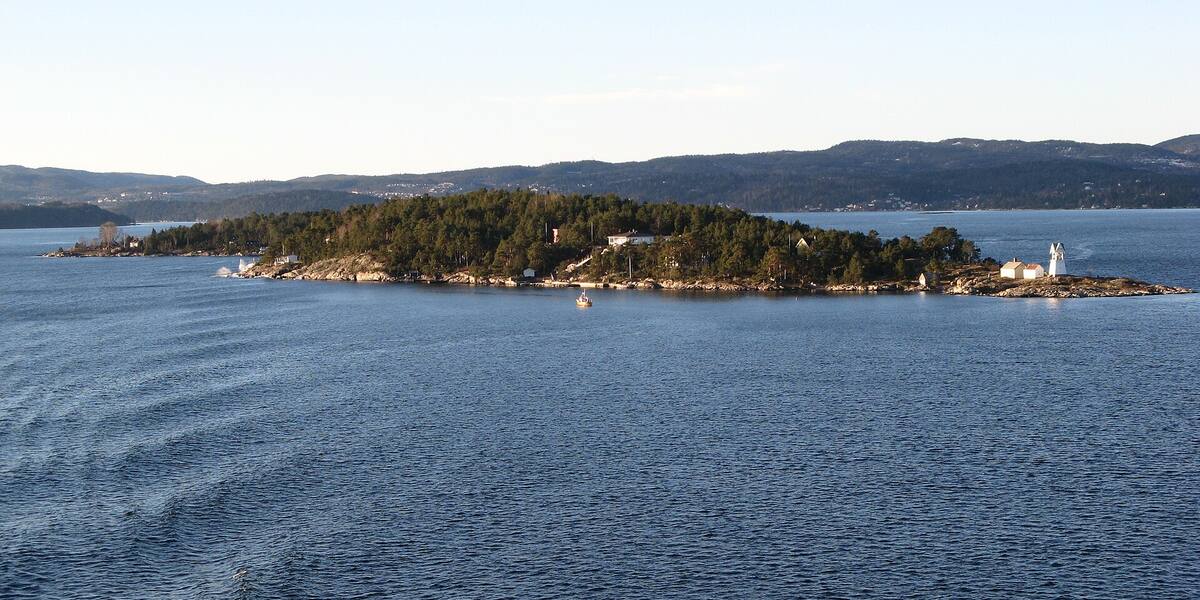
Island at the northern end of Frogn, about 1.3 km long, with 61 cabin properties. The protected fog bell station on the northern tip can be rented through Kystled Oslofjorden.
A long island at the northern end of Frogn, around 1.3 km from south to north, just west of the Spro quay on the Nesodden shore. Look for the small free-standing tower in Swiss chalet style on the northern tip: that is the old fog bell. The shipping lane into Oslo runs close by, and that is the traffic the bell warned.
Protected fog bell station (cultural heritage monument). The boundaries and the rules are in Naturbase, and they are worth checking before you land anywhere outside the marked areas.
| Loading departures … |
Live times from Entur. Full timetable at Ruter.
Part of Kystled Oslofjorden. See all the coastal trail cabins.
B21 boat service / private boat; coastal trail cabin (the old fog bell station) via Kystled Oslofjorden.
Times shift with the season, and several of the island boats run only in summer. Check the current timetable at Ruter.
The island is called Søndre Langåra to separate it from Langåra in Asker further north; locally people just say Langåra. A fog bell was set up on the northern tip in 1896, a clockwork mechanism that struck in fog to guide boats past and warn them off the shallows. As far as is known it was the only staffed fog bell in the country. The bell was built into a free-standing timber tower with Swiss chalet detailing. The station also got a keeper's house, an outbuilding and a boathouse alongside.
The station closed in 1967. The clockwork and the mechanism are still preserved in the tower, and the buildings have been kept close to their original state. The site counts as valuable both for lighthouse history and for its architecture, and it is protected under the Cultural Heritage Act. The state owns the buildings.
The rest of the island is cabin ground, 61 properties across roughly 30 hectares.
The fog bell station is let as a coastal trail cabin (*kystledhytte*) through Kystled Oslofjorden, run by Oslofjordens Friluftsråd, the regional outdoor recreation council. There are five beds in the keeper's house. The cabin is right on the shipping lane, looking out at the traffic passing the northern end of Drøbaksundet. Otherwise this is private cabin ground, with no café and no public facilities.
The cabin is booked through Oslofjordens Friluftsråd (friluftsliv.oslofjorden.org / kystled@oslofjf.no). Coastal trail cabins are let to one group at a time and are self-catering. You bring your own food, carry everything in and clean up after yourself. The nearest mainland quay is Spro on the Nesodden shore, straight east. Come by private boat or kayak. The buildings on the northern tip are protected, so leave them as they are, and respect that the rest of the island is private.
The bell struck in fog for 71 years, from 1896 to 1967, worked by a keeper who lived on the island. It was a staffed fog bell, probably the only one in Norway.
The tower is built in Swiss chalet style, the same decorative timber architecture found on Norwegian villas and railway stations in the late 1800s. That was an unusual style for a navigation station.
You can sleep in the keeper's old house. The clockwork that once warned ships is still in the tower next door.
Oslo Sea Experience passes Søndre Langåra on its private fjord trips from Tjuvholmen.
The Norwegian version notes which facts were taken from each source: Søndre Langåra på norsk.