Photo: Bjoertvedt·CC BY-SA 3.0· Wikimedia Commons
Islands / Asker / Tofteholmen
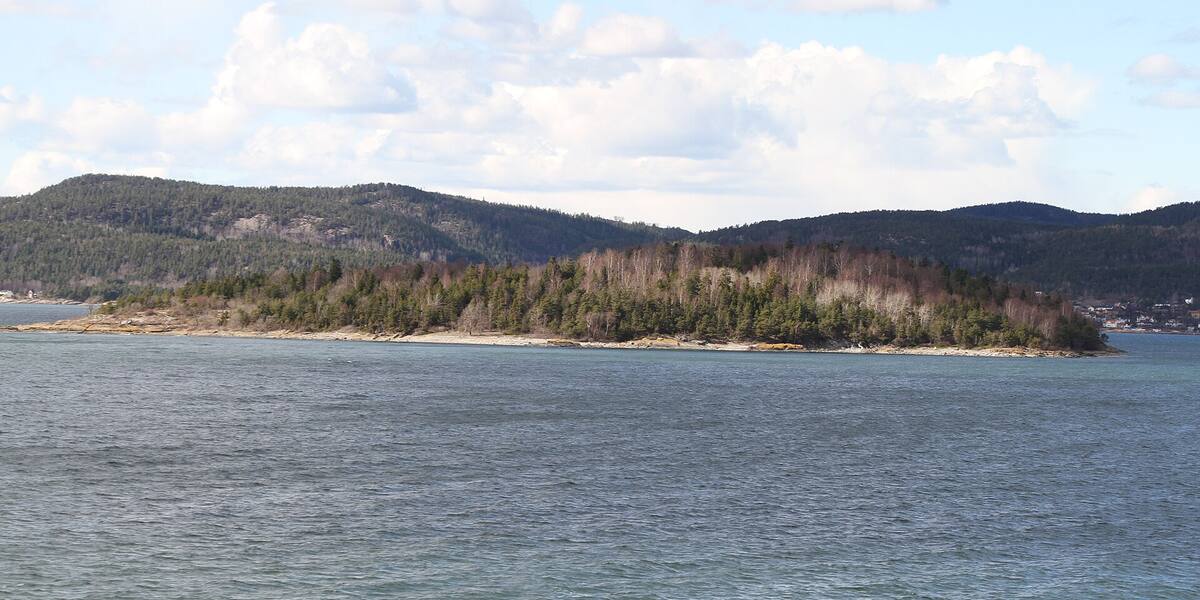
Tofteholmen is an island in Breiangen south of Tofte in the former Hurum, now Asker. It became a nature reserve in 1919, among the oldest protected areas in Norway. Naturvernforbundet, the Norwegian conservation society, owns it. Known for one of the warmest local climates in the country, a rich flora on gabbro bedrock, and a seabird colony with seals in the surrounding water.
From the water you see lush deciduous vegetation on an islet well exposed in Breiangen, south of Tofte in the old Hurum, now Asker. The protection order here dates from 1919, among the very earliest in Norway. Keep your distance in the nesting season. Seabirds breed here, and seals lie on the skerries around it.
Nature reserve (protected 1919); landing prohibited in the nesting season 15 April to 15 July, dogs leashed all year, camping and organised events prohibited. The boundaries and the rules are in Naturbase, and they are worth checking before you land anywhere outside the marked areas.
Private boat or kayak; landing prohibited in the nesting season, 15 April to 15 July.
No scheduled boat comes here. You will have to find the nearest public quay yourself, and the rest is your own boat or a kayak. Check the wind and wave forecast before you set out. The open stretches in the outer fjord turn unpleasant in a fresh breeze.
Tofteholmen was protected on 20 June 1919, as one of the earliest nature conservation areas in the country. The reserve covers 11.8 hectares (118 dekar) and is owned by Norges Naturvernforbund, the Norwegian conservation society. The grounds for protection are an unusual combination of gabbro and sedimentary bedrock, which supports one of the most varied occurrences of vascular plants, lichens and insects in Norway. The local climate is among the warmest in the country and lets heat-loving species thrive here.
Nothing is built on Tofteholmen, and the whole islet is protected nature. It is an important breeding site for seabirds, and a colony of harbour seals shares the water with the neighbouring islets Ranvikholmen and Mølen. The protection order governs use. This is an islet to see from the boat.
Come by private boat or kayak. Landing in the seabird breeding areas is prohibited from 15 April to 15 July. Dogs must be leashed all year. Camping and organised events are prohibited. All vegetation is protected, so no plant picking. These terms come from the protection order. Read the regulation in force before going ashore.
Tofteholmen has been protected for more than a hundred years. The order came in 1919, when Norwegian nature conservation had barely started.
Naturvernforbundet owns the islet and holds the deed, on top of the public protection order.
The combination of gabbro bedrock and one of the warmest local climates in the country gives plants, lichens and insects a diversity few other places in Norway can match.
Oslo Sea Experience passes Tofteholmen on its private fjord trips from Tjuvholmen.
The Norwegian version notes which facts were taken from each source: Tofteholmen på norsk.