Photo: Johand199·CC BY 4.0· Wikimedia Commons
Islands / Fredrikstad / Kråkerøy
Kråkerøy is Fredrikstad's largest island and a district of the city, about 20 km² with around 9,800 residents. Four bridges connect it to the centre, and county road 108 runs south to Hvaler. There are schools, a university college, Fredrikstad stadium and an old shipyard site, along with skerries and open recreation areas.
Kråkerøy is the large island directly south of central Fredrikstad, the one you sail along on the way out of the Glomma. Look for the cranes and the old yard halls at Værste on the north side, where Fredrikstad Mekaniske Verksted stood. Further in, the Glomma splits into two channels around the small islet of Isegran, where a reconstructed mill stands.
By car over the bridge from central Fredrikstad.
The island is connected by road, so you need neither a boat nor a timetable.
People have lived on Kråkerøy for more than 6,000 years. Around 30 Stone Age settlement sites from 4200–3500 BC are documented on the island, among them Rødsmyra. In 1945 the “Kråkerøy man” was found, an old skeleton with marks of violence on it.
In the 1200s Alv Erlingsson built a fortress on Isegran, the small islet where the Glomma divides. Isegran later housed Norway's only wooden boatbuilding course, with room for 15 students per intake.
Industry shaped the island. In 1873 the first ship was launched from Fredrikstad Mekaniske Verksted (FMV), which grew into one of the largest shipyards in Scandinavia. The yard built Michael Sars and the steamships Dronning Maud and Nordstjernen, and developed the Fredrikstad type. It closed in 1988 after 115 years in operation. Jøtul cast stoves and fireplaces on the west side at Glombo. Granite from Råholmen was exported to building projects at the Kiel Canal and in London, Buenos Aires and Havana. During the war, granite blocks ordered for Nazi monuments were never finished and were left lying on the beaches.
In 1948 the prime minister Einar Gerhardsen gave his famous speech at Folkvang on Kråkerøy, the Kråkerøy speech, announcing a harder line against Norwegian communists. It is a fixed point in Norwegian post-war history.
Kråkerøy was a municipality in its own right until 1 January 1994, when it was merged with Borge, Fredrikstad, Rolvsøy and Onsøy into today's Fredrikstad municipality. At the merger the island had 7,459 residents.
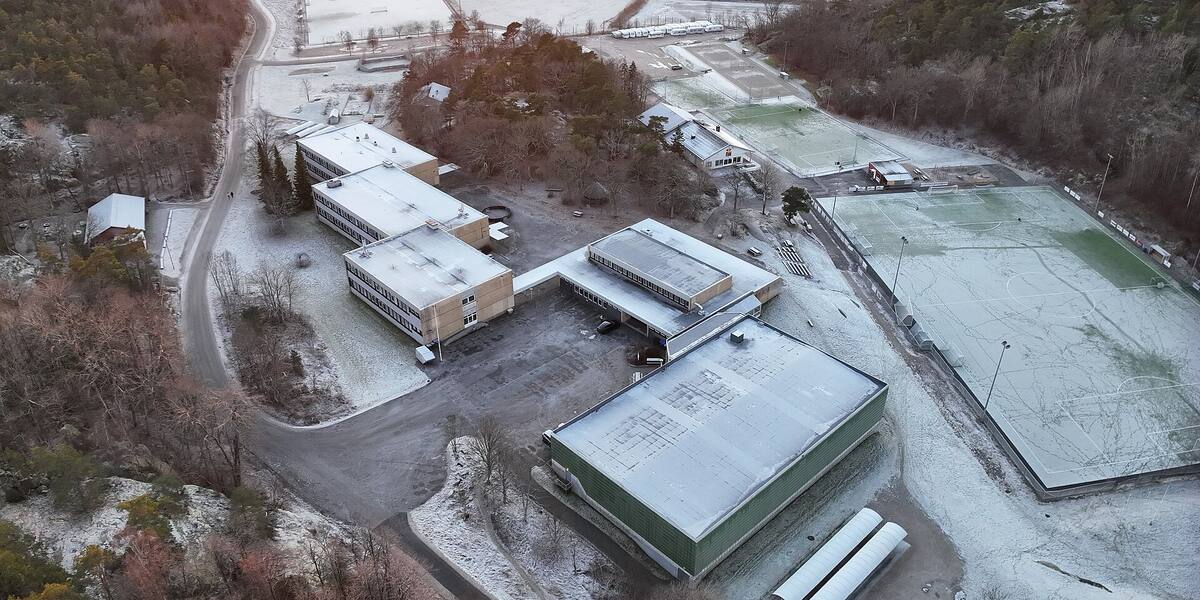
Kråkerøy is a densely populated district of Fredrikstad, with primary schools, a lower secondary school, Østfold University College and Fredrikstad stadium, which opened in 2007 and holds around 12,500. Outside the housing areas there are walking paths, swimming spots and open skerries. Holtevarden, the island's highest point at 67 metres above sea level, has a Bronze Age burial mound and a view towards Hvaler, Vestfold and Sweden.
Kråkerøy is reached by car over the bridges from central Fredrikstad, with no ferry involved. From the water there are quays, a guest harbour and swimming spots around the island. Isegran has its own guest harbour and a café in season. No general protection regulation is known for the island as a whole.
The Kråkerøy speech of 1948 is one of the most quoted speeches in Norwegian political history, and it was given in a community hall on this island rather than in the capital.
The Fredrikstad type, a ship design developed at FMV, became an international term between the wars. The yard delivered ships for more than a hundred years before it closed in 1988.
The granite under your feet here has ended up all over the world, at the Kiel Canal, in London and in Havana. Some blocks never got further than the beach, because the war ended before Hitler's monuments were raised.
Locally the island is called Blomsterøya, the flower island, after its rich flora.
Oslo Sea Experience passes Kråkerøy on its private fjord trips from Tjuvholmen.
The Norwegian version notes which facts were taken from each source: Kråkerøy på norsk.