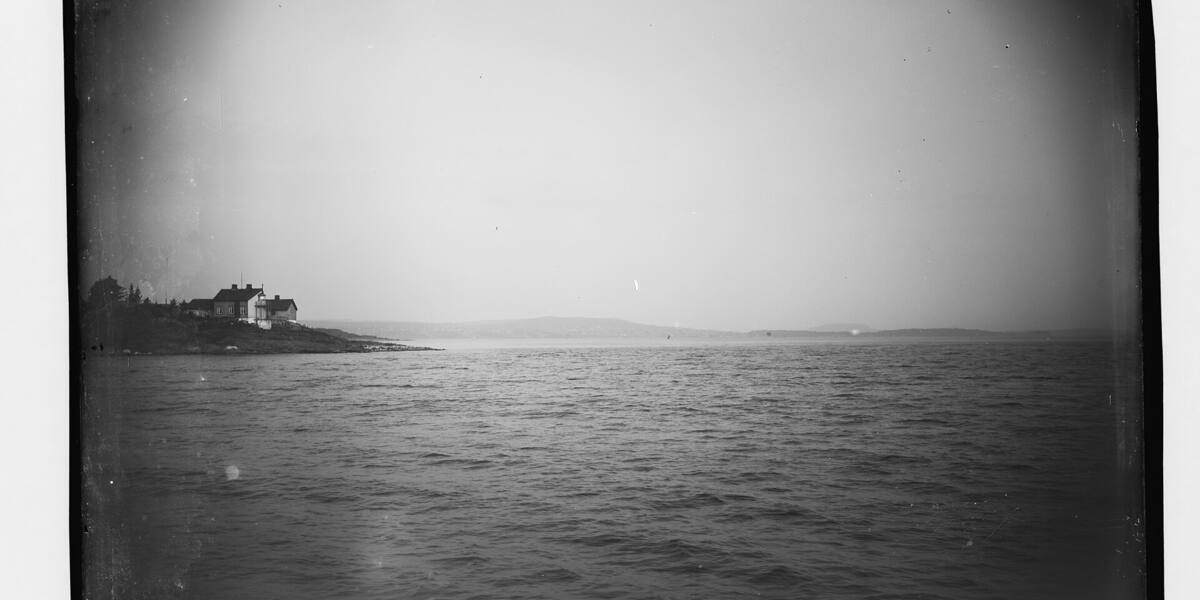
Photo: Marthinius Skøien·Public domain· Wikimedia Commons
Islands / Horten / Bastøy
Bastøy is a state-owned island of 2.23 km² southeast of Horten, with forest, farmland and beaches, a lighthouse from 1840 and a stone church from 1902. The open prison has been there since 1988, and a reform school for boys before that, from 1900 to 1970.
Bastøy is the large wooded island southeast of Horten, 2.23 km² of fields and beaches between pine ridges. The low stone building with a tower at the southern point is the lighthouse from 1840. A working prison operates here, so there is no calling in. This is one to tell on the way past, with Horten astern.
Ferry from Horten, but this is a working prison island with no free public access.
Boats do run here, but the quay is not in Entur’s system. It is usually a summer service or a private crossing that never enters the national journey planner. Check with the operator before you build a day around it.
The state bought Bastøy in 1898 for 95,000 kroner and opened a reform school (*skolehjem*) for “difficult” boys in 1900. The boys were between 8 and 19 and lived in five dormitory houses holding around 30 each, with schooling combined with farm work and workshop training. The regime was harsh, and on 20 May 1915 the boys rose against the management. That episode is the basis for the feature film Kongen av Bastøy (2010), released internationally as King of Devil's Island. The school earned a reputation as a penal institution and closed around 1 October 1970.
The lighthouse came first: a stone house with a low tower, lit in 1840 and replaced by a lantern in 1986. The stone church on the island was built in 1902 for the institution's people.
After 1970 the buildings were a care home from 1971 to 1987, then a district prison, and from 1988 a national open prison. Bastøy prison today is an “eco-prison” with around 115 inmates who serve their sentences without walls, working on the farm and in the forest.
The island is state-owned and operated by the Norwegian Correctional Service. The prison is open, and inmates move about freely, grow the food and manage the forest. There is no public right of access. Visits require an arrangement with the prison.
The ferry Bastøy runs from its own quay near Horten for staff, inmates and arranged visitors. It is not a tourist ferry, and there is no free landing. Treat Bastøy as an island to pass rather than to visit, and keep well clear of the prison quay. On protection: no access restriction is registered in the surrounding waters, but the island itself is a controlled prison area.
Bastøy is probably the only place in the Oslofjord where the inmates themselves run an organic farm, with cattle on pasture and their own forestry.
The 1915 uprising began as a protest against the food and the discipline. It ended with the navy being called in from Horten to put it down.
The lighthouse from 1840 was in service for 146 years before a simple lantern took over the job in 1986.
Oslo Sea Experience passes Bastøy on its private fjord trips from Tjuvholmen.
The Norwegian version notes which facts were taken from each source: Bastøy på norsk.