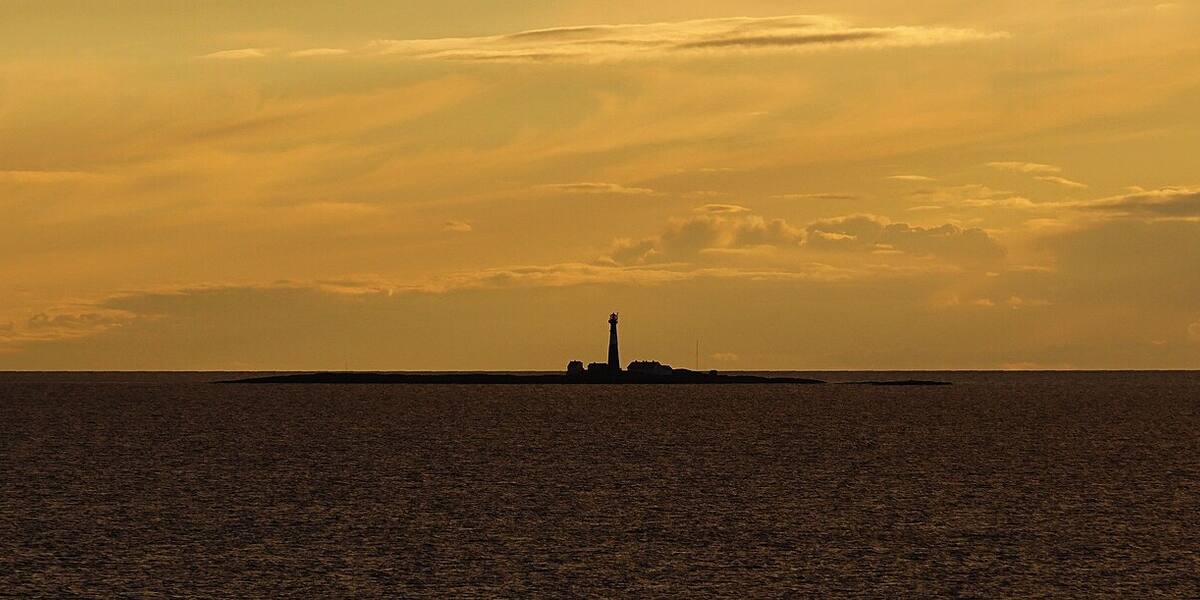
Photo: Jens Cederskjold from København S, Danmark·CC BY-SA 2.0· Wikimedia Commons
Islands / Færder / Tristein
A small group of islets (Tristeinane, also known as Lille Færder) at the outer edge of the Oslofjord, about 1.6 nautical miles south of Store Færder. The middle islet carries Færder lighthouse, in service since 1857 and one of the best-known lighthouses in the country. The group is part of Færder National Park, established in 2013.
Three low islets at the mouth of the Oslofjord, 1.6 nautical miles south of Store Færder. Færder lighthouse stands on the middle one, a slender red cast-iron tower 43 metres high, among the best known in the country. You are on the threshold between the fjord and the Skagerrak here. With the lighthouse dead ahead, you are as far south as the Oslofjord goes.
Færder National Park (2013). The boundaries and the rules are in Naturbase, and they are worth checking before you land anywhere outside the marked areas.
Own boat; Færder lighthouse has seasonal visits, guided tours and keeper's quarters, so check current opening hours.
No scheduled boat comes here. You will have to find the nearest public quay yourself, and the rest is your own boat or a kayak. Check the wind and wave forecast before you set out. The open stretches in the outer fjord turn unpleasant in a fresh breeze.
Færder lighthouse came into service in 1857. The tower was cast in iron at Bærums Verk and is among the tallest cast-iron lighthouses in the country, 43 metres high, with the light 47 metres above the sea. It replaced the old coal-fired light on Store Færder, which had been burning since 1697.
The middle islet was called Lille Færder, a name recorded in the English chart atlas The English Pilot of 1780. The name followed the light when the function moved here from Store Færder in 1857.
The lighthouse was automated in 1988 and kept a crew until 2005. It has been protected as a cultural monument since 1997 and is owned and operated by the Norwegian Coastal Administration (Kystverket). It shows three white flashes every 30 seconds, visible for 19 nautical miles, and doubles as a DGPS station. Weather has been measured here since 1885. In July 2025 the station set a Norwegian record with ten tropical nights in a row.
The station is a popular destination, with the keeper's house and outbuildings around the tower itself. The Norwegian Lighthouse History Society (Norsk Fyrhistorisk Forening) and local volunteers run seasonal visits, guided tours and overnight stays at the station. Opening hours and booking terms vary with the season.
Landing is by your own boat. There is no ferry. Coming ashore on the bare rock needs calm water, and the sea builds quickly this far out, so read the forecast. Visits and overnight stays at the station are booked through the operating society; check current opening hours. Protection: Tristein lies inside Færder National Park, established on 23 August 2013, and the lighthouse complex itself has been protected since 1997. Seabird reserves in the area are closed to all traffic from 15 April to 15 July, so check Naturbase, the national database of protected areas, before landing on neighbouring islets.
The tower is 43 metres of cast iron, made at Bærums Verk in 1857. It was carried out and raised on an islet in the open mouth of the fjord.
Færder is the entrance mark for the Oslofjord. Every ship bound to or from Oslo has passed this point for close to 170 years.
The station has measured weather since 1885, and in July 2025 it set a Norwegian record with ten tropical nights in a row, nights when the temperature never fell below 20 degrees.
The name Lille Færder was on English sea charts as early as 1780, before the lighthouse moved here.
Oslo Sea Experience passes Tristein on its private fjord trips from Tjuvholmen.
The Norwegian version notes which facts were taken from each source: Tristein på norsk.