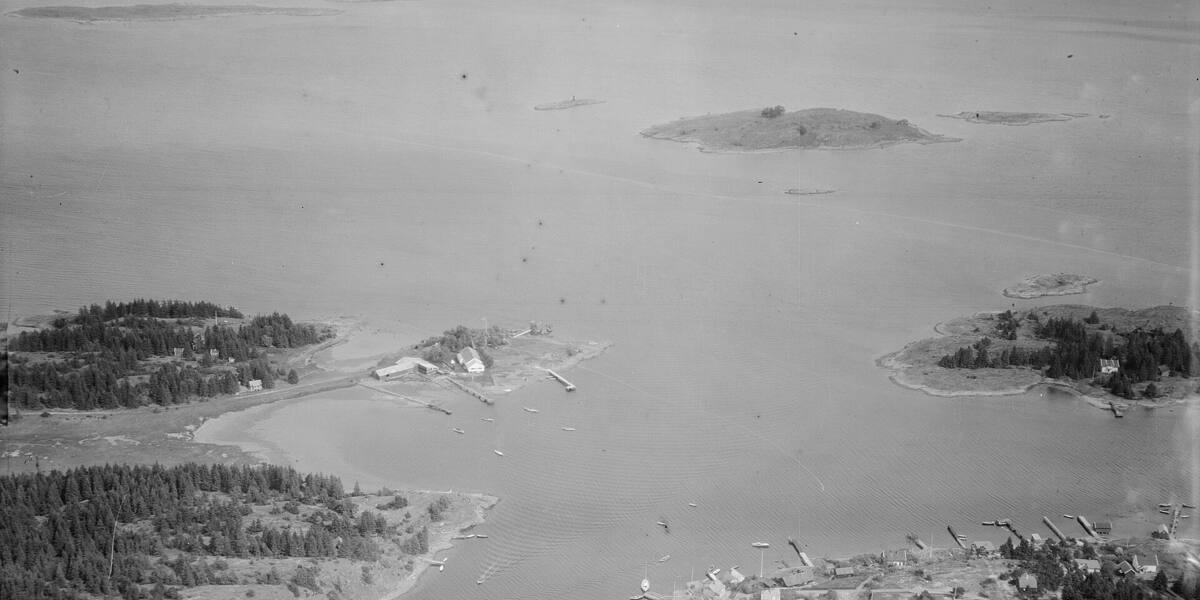
Photo: Vestfoldmuseene from Sandefjord, Norway·CC BY-SA 2.0· Wikimedia Commons
Islands / Færder / Føynland
Føynland is a densely built residential island between Nøtterøy and Husøy with around 1,400 residents. Foynlandsbrua, which is considered worth preserving, connects it to Nøtterøy, and another bridge crosses Myrasundet to Husøy.
Around 1,400 people live on this island between Nøtterøy and Husøy, and the housing is packed close. Two bridges hold it fast, Foynlandsbrua over Ekenessundet to Nøtterøy and a bridge over Myrasundet to Husøy.
Road and bridge from Nøtterøy (Foynlandsbrua).
The island is connected by road, so you need neither a boat nor a timetable.
All three farms on the island are said to have belonged to St. Olav's monastery until the Reformation in 1537, when the property passed to the crown. By the early 1700s each of the three farms had its own owner. The name has shifted form over time, from Føenland through Føienland and Foynland to today's Føynland.
Since the early 1990s the island has been heavily built up, so much so that some residents think it is overbuilt.
The 1,400 residents live in roughly 450 households. People here commute to Tønsberg and Nøtterøy over the bridges.
Road connections run over Foynlandsbrua from Nøtterøy and over Myrasundet to Husøy, so you drive here. No protected areas with seasonal restrictions are known on the island itself. Foynlandsbrua is considered worth preserving as a cultural monument.
A monastery owned the whole island in the Middle Ages. St. Olav's monastery in Tønsberg held all three farms on Føynland until the Reformation took them in 1537.
The name has travelled through four spellings, Føenland, Føienland, Foynland and Føynland, before it settled.
Oslo Sea Experience passes Føynland on its private fjord trips from Tjuvholmen.
The Norwegian version notes which facts were taken from each source: Føynland på norsk.