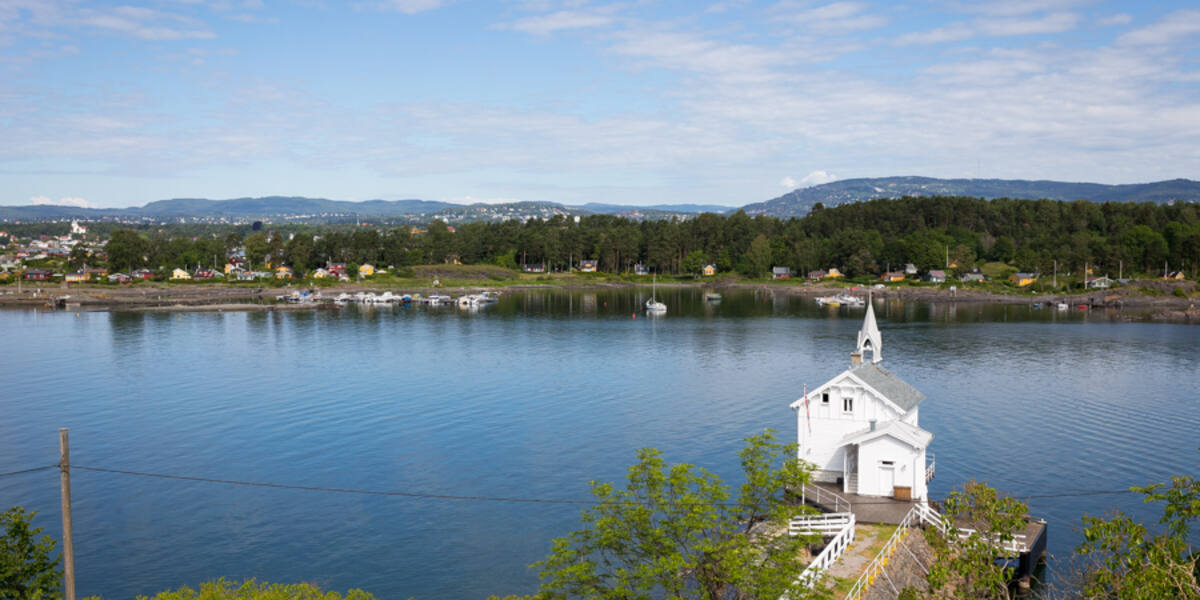
Photo: Tore Sætre·CC BY-SA 4.0· Wikimedia Commons
Lit 1827
It began in 1827 with a single pilot keeping a light on the islet by agreement with the harbour commission. A century later, Heggholmen became the first lighthouse in Norway with electric light. Around it worked an island of linseed oil, soap and its own school.
The Heggholmen light was first lit in 1827, when the Christiania harbour commission agreed with the pilot Svend Iversen that he would keep a light on the islet. That is how the lighthouse story here began: not with an authority, but with one man and an agreement.
The present building was raised in 1876 in Swiss chalet style, unusual among Norway's wooden lighthouses. The tower is 6.5 metres tall, and the light sits 15.2 metres above the sea. In 1928 Heggholmen became the first lighthouse in Norway to get electric light. It was automated in 1959, decommissioned in 1972, and stands today as a protected heritage site.
The island around the light was a workplace. A steam-driven linseed oil press and soap production ran here, and remains of workers' housing and a schoolhouse from the industrial years survive. The industry island kept its own school for the workers' children, and the foundations still stand. Norsk Naturarv restored the site between 2005 and 2008.
Access, protection and live departures stand on the island page: Heggholmen.
Every fact in this piece is drawn from the island dossier behind the island page, and these are its sources.