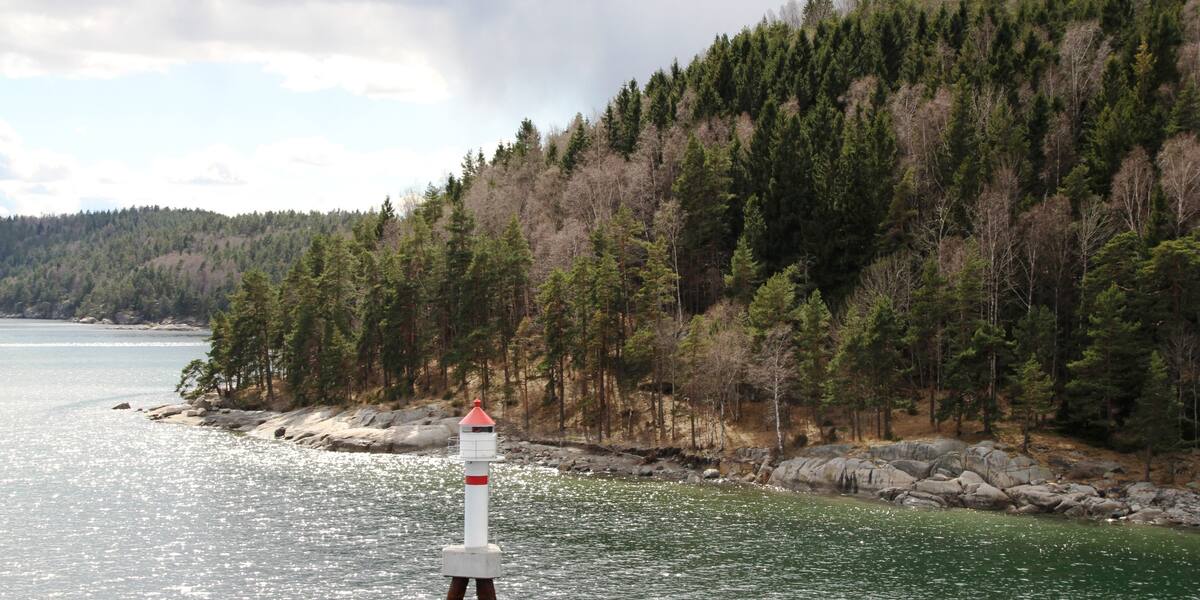
Photo: Bjoertvedt·CC BY-SA 3.0· Wikimedia Commons
Closed 1918
The largest island of the inner Oslo fjord made gunpowder through the First World War, until an explosion in 1918 ended the works. Of the factory's 88 buildings, 22 remain, and today white-tailed eagles nest in the east.
Håøya covers 5.2 square kilometres, which makes it the largest island of the inner Oslo fjord, and through the First World War it was an industrial site: A/S Haaøens Fabriker made gunpowder on Mellomøya on the eastern side. The works closed in 1918, after an explosion. The factory counted 88 buildings at its height, and 22 of them remain.
In 1937 the municipality of Oslo bought most of the island for public recreation, and the municipality owns and manages it still. The south-eastern part of Sørøya belongs instead to Oscarsborg fortress and is Defence property, which is why bunkers and gun emplacements lie in the south, part of the defence of the Drøbak sound.
During the occupation the island was used by the Germans, and local historical sources record that six young men were executed on Håøya in 1942.
Nature has taken most of it back. Varden, at 229 metres, is the highest point in the Oslo fjord, and in the east the white-tailed eagle nests again, with movement restrictions in the breeding season as a result. The gunpowder factory's ruins lie in the woods of an island bought and managed for public recreation.
Access, protection and live departures stand on the island page: Håøya.
Every fact in this piece is drawn from the island dossier behind the island page, and these are its sources.