Photo: Tommy Gildseth·CC BY-SA 4.0· Wikimedia Commons
Opened 1927
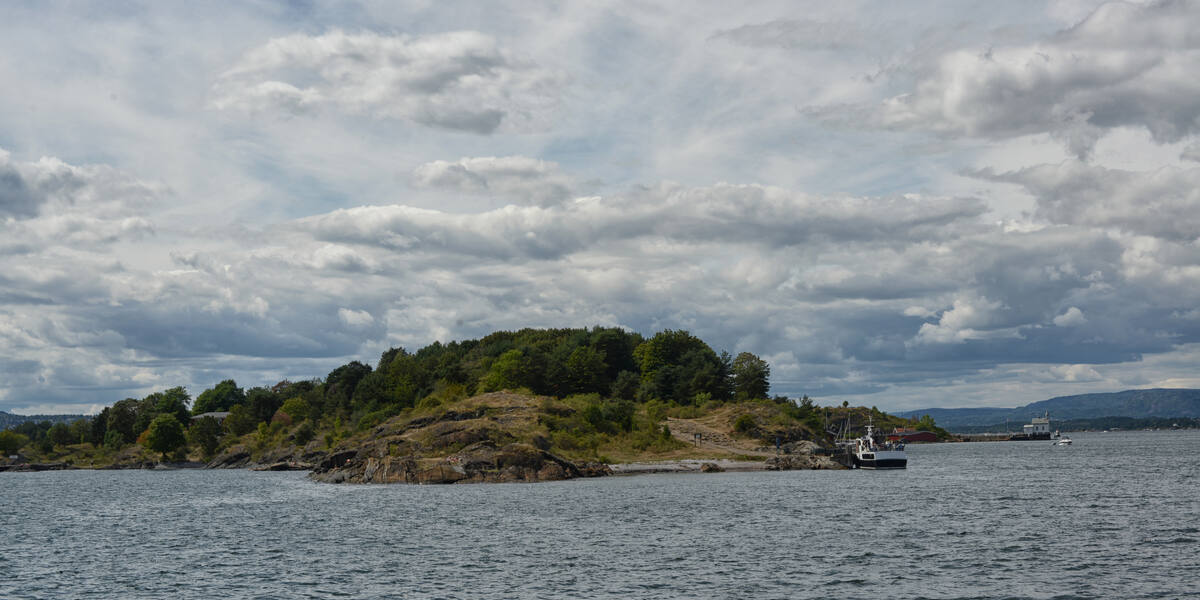
Gressholmen is its own name: grazing land out in the fjord. Then the aircraft came. From 1927 this islet was Oslo's airport, with a Berlin route from opening day, and the hangar still stands.
The name says what the island was. Gressholmen, the grass islet, carried livestock and grazing long before anyone thought of flight, a green knoll of some 0.05 square kilometres tied to its neighbours in a cluster of about 149 decares.
Construction began in 1926, and in 1927 the Gressholmen seaplane harbour opened as Oslo's first airport. The first aircraft in was a Dornier Do J «Wal» of Deutsche Luft Hansa, which landed on 16 July 1927. A route left for Berlin the same day, via Gothenburg, Copenhagen and Stettin. A passenger who boarded on a grazing island in the Oslo fjord in the morning could be in Berlin nine hours later.
The seaplane harbour had a built-in weakness: it could only operate from 1 April to 30 September, because the fjord froze in winter. That is why Sola near Stavanger, opened in 1937, became Norway's first year-round civil airport. Gressholmen was still the country's most important airport until Fornebu opened in 1939 and took over.
During the Second World War the Germans used the site as a seaplane workshop. An anti-aircraft battery on the island was established for 15 officers and 80 men, but on the morning of 9 April 1940 only six officers, 22 soldiers and 17 newly called-up recruits were present, without proper cover, sandbags or helmets, as German dive bombers attacked.
The hangar and slipway from the airport years still stand, and boat owners use them today — leisure boats winter where the flying boats once did. The island also carries a stranger recent note: its feral rabbits were removed at Easter 2007, because their digging destroyed the vegetation and eroded the small island.
Access, protection and live departures stand on the island page: Gressholmen.
Every fact in this piece is drawn from the island dossier behind the island page, and these are its sources.