Photo: Tore Sætre·CC BY-SA 4.0· Wikimedia Commons
Islands / Oslo / Malmøykalven
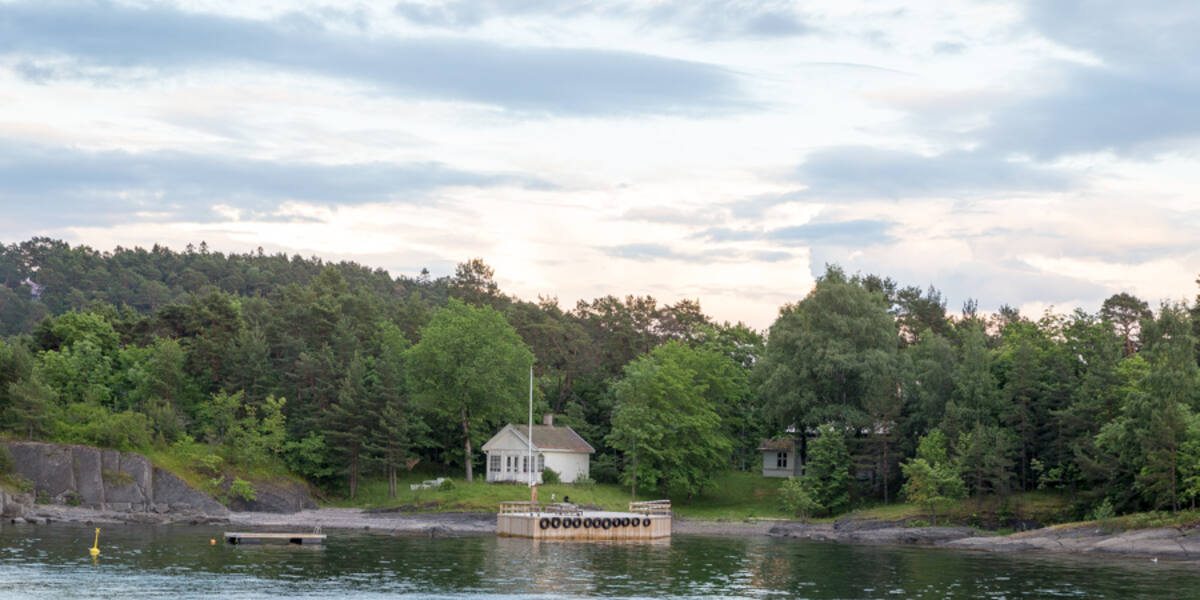
A small island west of Malmøya, separated from it by a narrow, shallow sound. Owned by the City of Oslo since 1915 and once a hospital for sick children. The buildings are now used by the child welfare service among others. Known for the contested deep-water disposal site for contaminated sediment from Bjørvika just to the west.
Malmøykalven is immediately west of Malmøya, in the inner part of the fjord towards Bekkelaget. A narrow, shallow sound separates the two. Look for the buildings: former hospital blocks, now in public use. Right to the west, under the keel, is the deep-water disposal site Oslo fought over.
Malmøya og Malmøykalven nature reserve (protected as a natural monument in 1979, extended in 2008). The boundaries and the rules are in Naturbase, and they are worth checking before you land anywhere outside the marked areas.
Own boat or kayak (there is a ferry quay, but the buildings are in public service and the island is not freely open).
No scheduled boat comes here. You will have to find the nearest public quay yourself, and the rest is your own boat or a kayak. Check the wind and wave forecast before you set out. The open stretches in the outer fjord turn unpleasant in a fresh breeze.
The City of Oslo bought Malmøykalven in 1915 for 53,000 kroner. For many years it was a hospital for children with scrofula, tuberculosis of the lymph nodes and skin. Sea air and distance from the city were thought to help. In the 1930s there were ambitious plans for a large bathing complex here, including a bridge 15 metres high to the neighbouring island. The plans were never carried out.
Malmøykalven was protected as a natural monument in 1979. The protection was extended in 2008, and the area now forms part of Malmøya og Malmøykalven nature reserve.
Between 2006 and 2009 Malmøykalven gave its name to an environmental conflict in Oslo. Contaminated sediment dredged from Bjørvika was dumped in a deep-water disposal site just west of the island, at around 70 metres depth. Critics feared the toxins would spread. Supporters argued that capping them at depth was safer than the alternatives.
The eight buildings here are used by the child welfare service among others. There is a ferry quay, but it is not open as a recreation area in the way the bathing islands further out are.
Private boat or kayak. The buildings are in public service, and this is not an open bathing island. Protection: designated a natural monument in 1979, extended in 2008, and now part of Malmøya og Malmøykalven nature reserve. Check Naturbase, the national database of protected areas, for the access rules in the reserve before going ashore.
The disposal conflict of 2006 to 2009: contaminated sludge from the Bjørvika development was sunk at 70 metres depth just west of Malmøykalven. Few issues have split the environmental movement in Oslo so evenly.
Malmøykalven was a hospital for children with scrofula. The belief then was that sea air and distance from the crowded city cured what penicillin later cured in a week.
The bathing complex planned for Malmøykalven in the 1930s, with its 15-metre bridge, stayed on the drawing board.
Oslo Sea Experience passes Malmøykalven on its private fjord trips from Tjuvholmen.
The Norwegian version notes which facts were taken from each source: Malmøykalven på norsk.