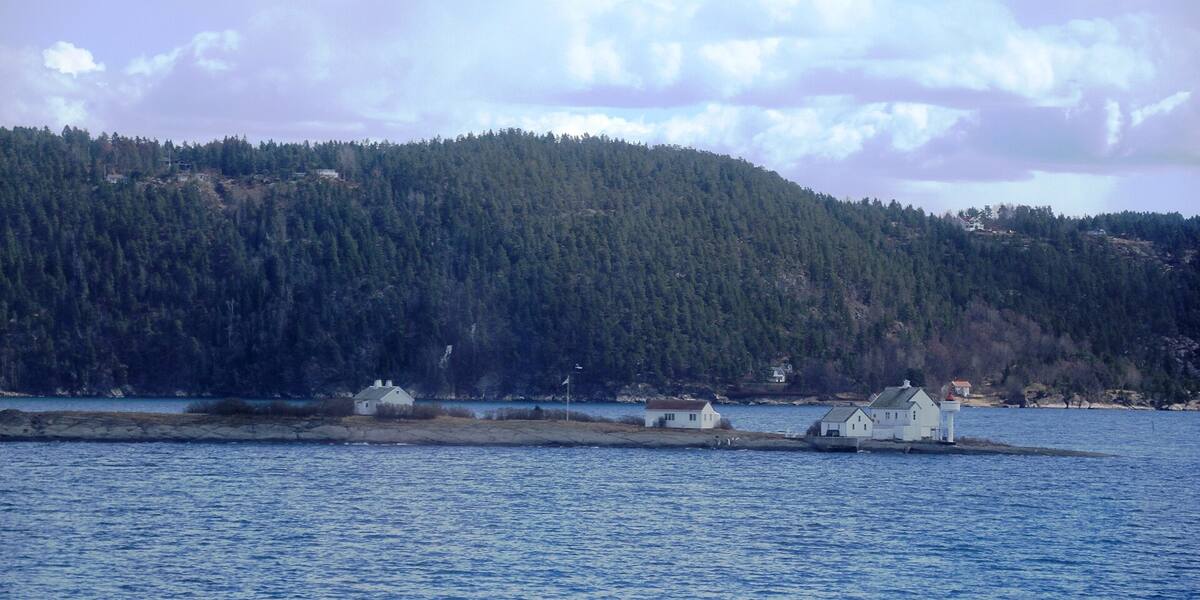
Photo: Bjoertvedt·CC BY-SA 3.0· Wikimedia Commons
Light since 1837
The name Steilene comes from the execution ground: the executed were set up here on stake and wheel, in sight of every ship bound for Christiania. Today a lighthouse from 1837 stands on the outermost islet, and the keeper's house is yours to rent for a night.
A steile was the stake and wheel of the execution ground. The executed were set up as terror and warning, out here in the shipping lane where everyone sailing towards Christiania had to pass. The site was chosen with care: nobody reached the city by sea without seeing what the city did to its condemned.
The group counts five islets, and the Mapping Authority's adopted names are Persteila, Landsteila, Storsteila, Knerten and Fyrsteila. Four of them carry the steile element. Knerten, the small one, is simply a nub of an islet.
The lighthouse on Fyrsteila was established in 1837, and someone kept its light burning for nearly 150 years, until it was destaffed and automated in 1984. A new lamp structure was then raised beside the old one. The lighthouse belongs today to the Coastal Administration and is leased by Oslofjordens Friluftsråd, which runs the keeper's house as a coastal trail cabin. The execution islets ended up as a place people pay to spend the night.
The traces of working life still stand about the islets: heritage buildings from older industry and coastal culture, an old fish-oil tank on Storsteila, and a sea cable running west from there. Since 2008 Nortek has operated a weather station on Fyrsteila, so the islets that once announced the city's severity now announce the weather.
Access, protection and live departures stand on the island page: Steilene.
Every fact in this piece is drawn from the island dossier behind the island page, and these are its sources.