Photo: Stig Ulfsby·CC BY-SA 4.0· Wikimedia Commons
21 May 1813
On 21 May 1813, Prince Christian Frederik stepped ashore on Søndre Sandøy, on his way to become governor and then king. The island he landed on later gave stone to Oslo City Hall, and held 325 people before the cabins took over.
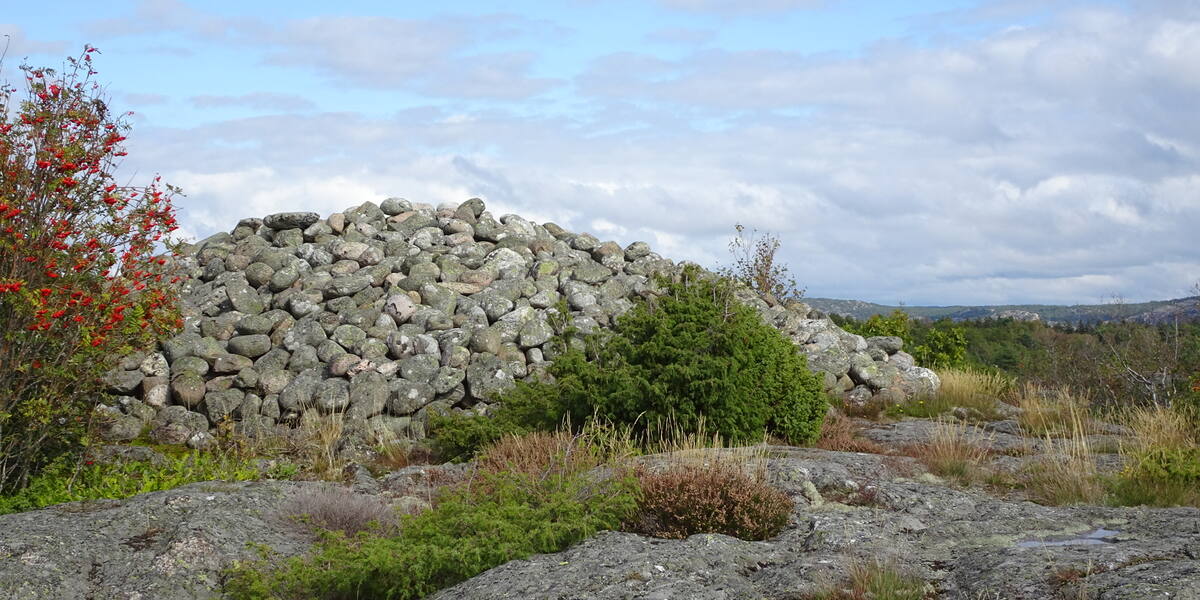
Bronze Age people buried their dead here more than three thousand years ago, and the cairn at Sanderød still lies there. In the Middle Ages fishermen's sheds stood on the island, and in the 1800s a herring saltery ran at Gravningsund. Søndre Sandøy was a working place long before it became a holiday one.
Then, on 21 May 1813, Prince Christian Frederik came ashore here. He arrived in Norway as governor. The year after, he was elected king at Eidsvoll, before the union with Sweden forced him from the throne that same autumn. His landing on this island was his first step on Norwegian soil in that role: a small Hvaler island became the first stop for the man under whom the constitution was adopted.
The island left a more solid mark on the capital too. The gneiss of Søndre Sandøy was quarried as building stone and used on the facade of Oslo City Hall. The dark, reddish stone in the walls has its origin out here in the Hvaler archipelago, cut and carried up the fjord.
The island was a living farming and fishing community, with 325 residents in 1900. Towards our time it emptied: 87 left in 2009, and more than 500 holiday cabins took over. The school, the saltery and the farms are gone, and what remains are the villages of Nedgården and Gravningsund, where the scheduled boat still calls all year.
Access, protection and live departures stand on the island page: Søndre Sandøy.
Every fact in this piece is drawn from the island dossier behind the island page, and these are its sources.