Photo: GAD·CC BY-SA 4.0· Wikimedia Commons
Telegraph 1809
In the Napoleonic Wars, Nakkholmen got an optical telegraph to signal enemy ships towards Akershus. A shipyard followed, then the cabins, and in the western rock lie the fossils that made a whole stretch of shore a nature reserve.
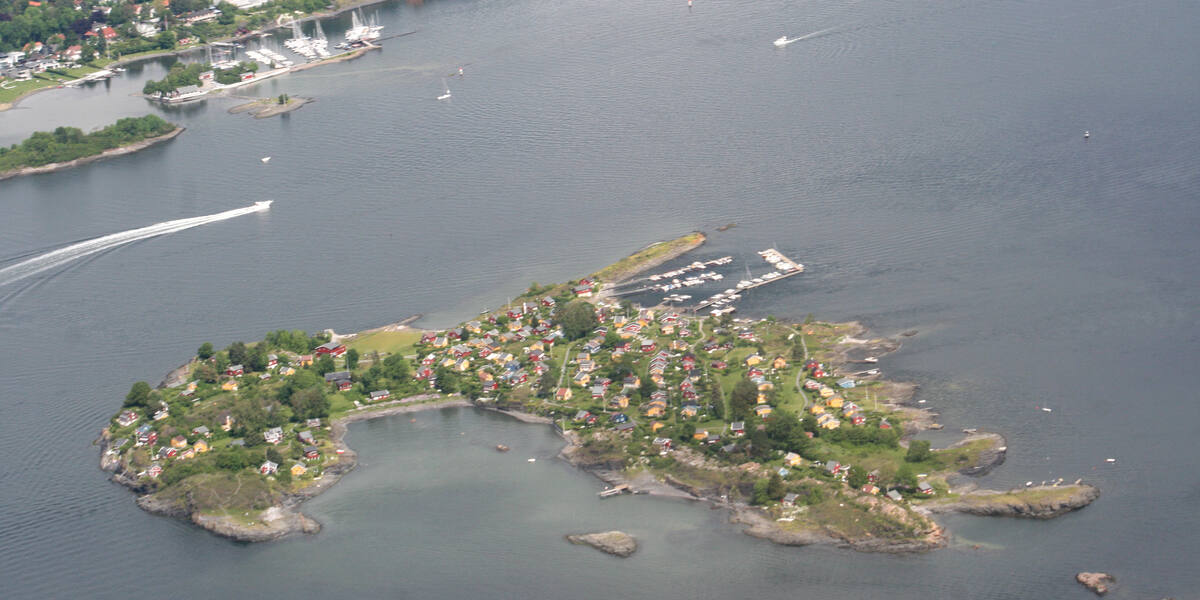
Nakkholmen covers 0.145 square kilometres, state-owned and managed by Statsbygg, and its history begins with a warning. In the Napoleonic Wars, in 1809, an optical telegraph station was built here to report enemy ships entering the fjord. Long before the cabins, a station stood here to flash word onward towards Akershus fortress.
From 1823 the state leased the island out ten years at a time, and from 1918 to 1952 a shipyard ran here. Cabin building got under way when it was permitted in 1923. Today 182 small cabins stand on the island, under strict rules for size, colour and appearance, and nobody lives there year-round. It is the regulation that has kept the whole island in the same low, uniform look since the 1920s.
The rock to the west is a fossil site. A coastal area of 25 decares was protected as a natural monument in 1988 and made a nature reserve in 2008. The shipyard is gone and the telegraph too, but the island's oldest archive lies in the rock itself.
Access, protection and live departures stand on the island page: Nakkholmen.
Every fact in this piece is drawn from the island dossier behind the island page, and these are its sources.